For a long time, outsourcing was seen primarily as a means of improving efficiency. Today, a different question has come to the fore: how can outsourcing actively contribute to value creation? A look at developments in the field of facility services shows why this perspective is changing.

In the past, outsourcing was primarily focused on reducing the workload: delegating tasks, cutting costs, and streamlining processes. This model is increasingly falling short. Buildings and work environments have become key factors in success and now influence productivity, health, energy consumption, and safety.
Facility Services as an Integrator
This shift is particularly evident in facility management. Cleaning, facilities, security, and workplace services do not operate in isolation from one another. If they are organized and managed separately, additional interfaces, duplication of effort, and a lack of transparency arise. Processes become more complex rather than more efficient. Only integrated management creates measurable results: clear responsibilities, seamless workflows, reliable data, and higher availability of buildings and systems. At the same time, energy consumption can be optimized, disruptions reduced, and service quality improved. Facility Services thus take on a new role—no longer merely a support function, but rather an integrator of the entire building operations process.
Dynamism, Pressure to Innovate, and New Requirements
At the same time, the environment in which many companies operate has fundamentally changed. Markets are more volatile, technologies are evolving faster, and regulatory requirements are increasing. Organizations face constant pressure to innovate and improve efficiency. In this context, outsourcing offers a strategic lever for maintaining flexibility. Fixed costs are converted into variable costs, economies of scale are leveraged, and capacities are adjusted as needed. New technologies or specialized solutions can be integrated more quickly without the need for costly expansion of internal structures.
At the same time, companies gain access to know-how and industry-specific expertise that often cannot be developed cost-effectively in-house. This allows organizations to focus consistently on their core business while operational support functions are managed professionally.
From Client to Strategic Partner
This development is also changing the role of clients. Instead of putting individual services out to bid, the focus today is on concrete goals: energy efficiency, operational safety, availability, user experience, or sustainability. Facility management partners are increasingly sharing responsibility for these results. The traditional service provider is evolving into a strategic partner who helps shape processes, analyzes data, and systematically identifies opportunities for optimization. The collaboration is shifting from the mere provision of services to shared responsibility for results.
Gaining Expertise Instead of Outsourcing Tasks
Outsourcing is becoming a strategic tool because it provides access to expertise and technology. The focus is not on the question “What are we outsourcing?” but rather “What capabilities are we gaining?” The shift from transactional outsourcing to a partnership-based collaboration fundamentally changes the role of outsourcing. It becomes a driver of quality, efficiency, and long-term growth. However, this requires professional management. Risks such as supplier dependency or the loss of know-how must be specifically minimized through clear governance, transparency, and active partner management. When implemented correctly, outsourcing becomes an investment in resilience and future viability—not merely a short-term cost-saving measure.
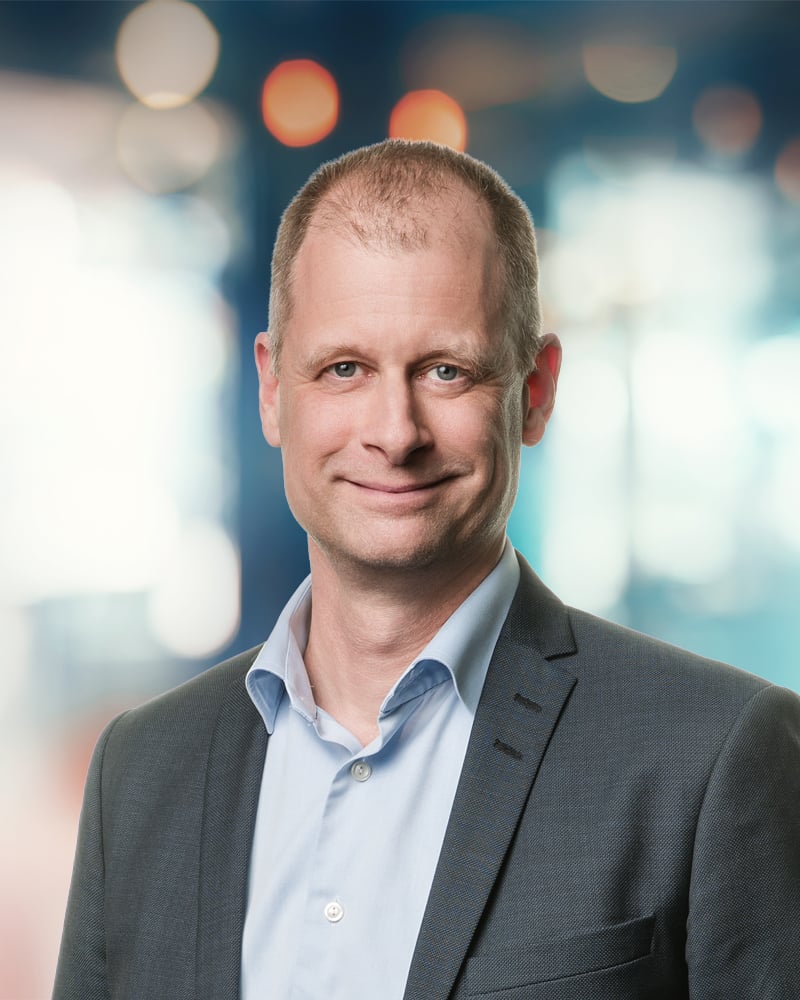
Portrait
Martin Zubler has been with ISS Switzerland since 2014 and has been a member of the Executive Board since March 2022. As Managing Director for the Aargau, Basel, Bern, Central Switzerland and Ticino regions, he is responsible for around 4,400 employees.