Demographics, the pandemic and technological developments are just some of the factors driving growth in the life sciences sector. ISS has been active in this sector for many years. Michael Hinz, Global Leader, and Sebastian Volders, Global Head of Growth, give us an insight into the global strategy for this strategic business division.
.png?width=1620&height=2025&name=Design%20ohne%20Titel%20(17).png)
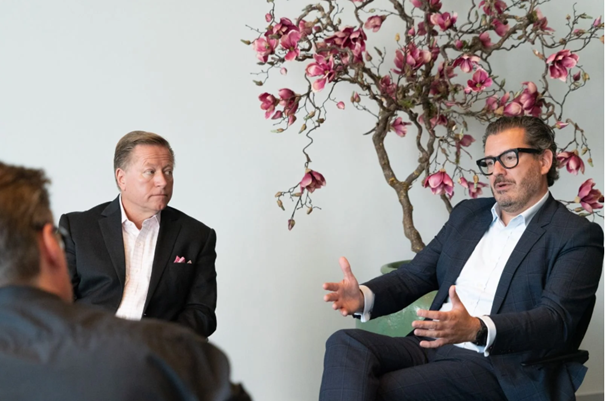
Michael Hinz and Sebastian Volders, what are your roles and responsibilities?
Sebastian Volders
The ISS Group has established a dual role for the strategic development of the Life Sciences segment. As Global Leader, Michael Hinz ensures that we take a consistent approach worldwide in the operational fulfillment of our contractual obligations to our Life Sciences clients. As Global Head of Growth, I am responsible for the growth strategy for markets and clients.
Where do you see the challenges in the coming years?
Michael Hinz
One challenge - in a positive sense - is that we’re growing as an organization. Like many companies, we find ourselves in a “war for talent.” In our field, this means finding specialists in technical services who have expertise in handling pharmaceutical, biotechnology, or medical devices. It’s difficult to find these skills and build them up across countries. We’ve been active in the life sciences sector for just over ten years. In terms of development opportunities, there’s still a lot of potential - for example, in digital solutions. When it comes to clients, I’m thinking of companies that are also in a growth phase, such as startups or firms with subsidiaries in multiple countries. We want to support these clients on their journey with innovative solutions and grow together with them.

Michael Hinz, Global Segment Leader Life Sciences, ISS Group
The life sciences sector is highly regulated, and there are also country-specific requirements. How does ISS manage to maintain a consistent approach from Singapore all the way to Switzerland?
Michael Hinz
ISS serves life sciences clients around the globe. Thanks to this presence, we are familiar with the various local and regional conditions of the companies and with the people on the ground. In operational facility management, our approach - applying our global quality standards and procedures while adapting them to client needs and the applicable regulations in each country - has proven effective. We don’t want to impose standardized processes everywhere. That’s not how the world works, and that’s not how our people work. But we want reliability, and we want to offer our clients the highest level of service. We achieve this by combining our global life sciences expertise with service tailored to local needs and the people involved.

Sebastian Volders, you are Global Head of Growth. Where - and specifically how - does ISS plan to grow in the life sciences segment?
Sebastian Volders
From a commercial perspective, I see various opportunities. First, there are the biotech startups: they’re increasingly coming into focus in the life sciences sector, and they’ll be the game-changers in five or ten years. When we look at Big Pharma, we’ve seen some volatility in recent years. Many companies need to refocus and get their drug pipelines back on track. As a result, large corporations with a full range of offerings are realigning themselves and spinning off business units that no longer fit their core strategy. For ISS, this means that we, too, must think within this framework. Commercial agility, paired with strong and rapid operational execution - that is our goal.

Sebastian Volders, Global Head of Growth, ISS Group
What is the potential of the life sciences sector for ISS? And what does that mean for Switzerland?
Sebastian Volders
The potential is there - globally and, of course, in Switzerland as well. Switzerland isn’t a large country. However, Switzerland is very important for the life sciences market because many well-known companies have their headquarters here. A great deal of research is conducted here. This is where the companies’ top executives are based, and this is where strategic decisions are made about the direction the companies are heading. And that’s important for ISS: we need to understand this path.
Michael Hinz, a local startup and a global pharmaceutical company have very different requirements for a facility management solution. What is ISS’s strength?
Michel Hinz
As an organization, we can scale both globally and locally. At the end of the day, however, it’s the site manager who matters most. That’s the most important person the customer interacts with. The Site Manager is rooted locally and is supported by a country, a region, and a global organization with everything that entails: from centers of expertise to best practices to standard operating procedures. Ultimately, it’s the Site Manager who, together with their team, delivers the services - and that’s what matters to the client. This is a very local approach, even though it’s backed by a global organization. So I believe that, thanks to this structure and our philosophy as an organization, we can offer the right solution for every client.