What does the "new normal" mean for companies and what opportunities arise from this development? A conversation with David Macherel, Managing Director Key Accounts, ISS Switzerland.
It will soon be a year since our lives changed dramatically. Maintaining social distance, greeting each other without physical contact, washing our hands frequently - these measures have long since become new habits. We’re adapting and finding our way in a new normal: as a society, as a company, and as individuals. What does the “new normal” mean for companies? And what opportunities arise from this development?

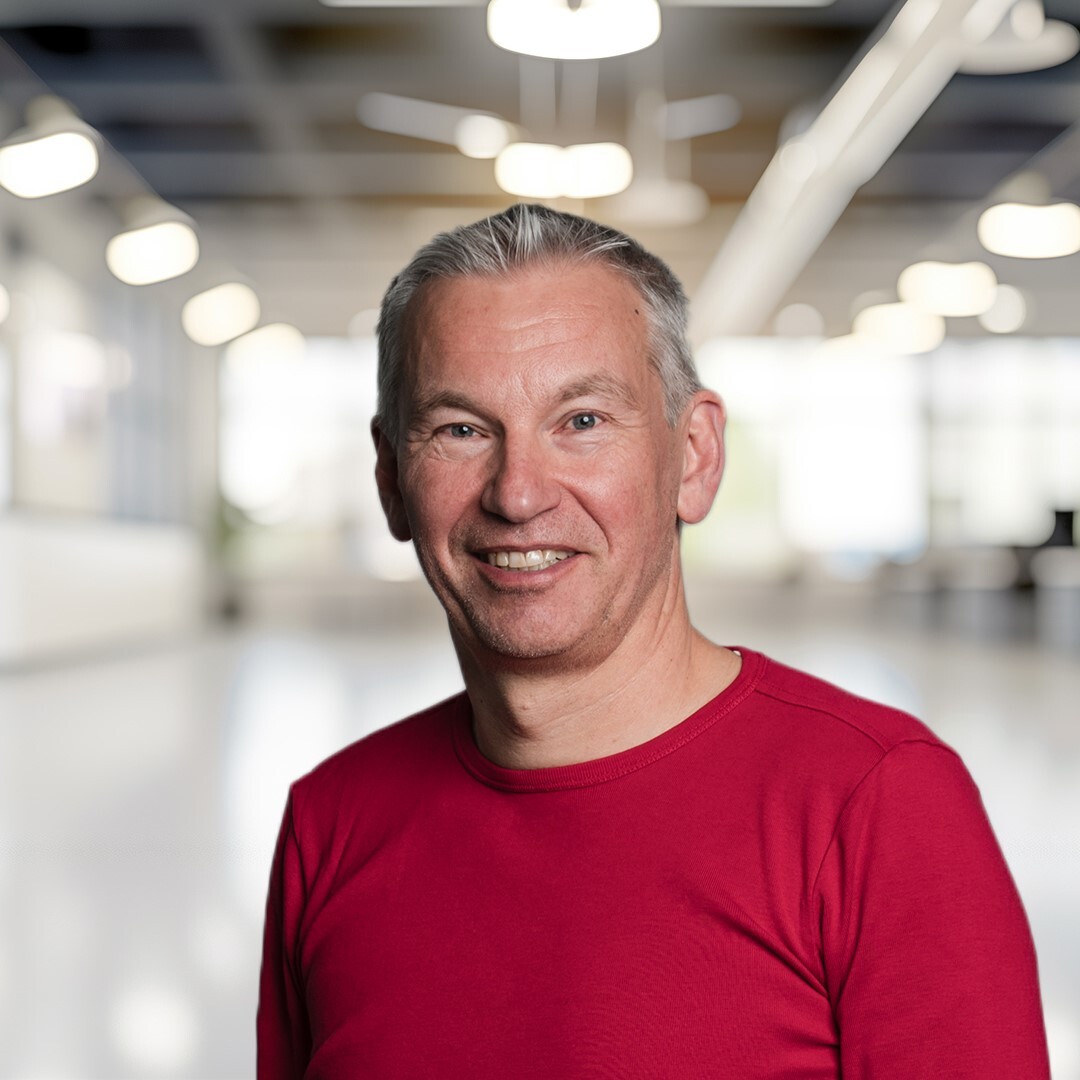
David Macherel, Managing Director of Key Accounts and a member of the Executive Board at ISS Switzerland
has led the Key Accounts division, which has 2,500 employees, since July 2020. He is a member of the Executive Board of ISS Switzerland. Prior to that, he managed one of ISS’s three largest clients in Switzerland for five years. A native of Fribourg, he holds a Master of Science in Management, Technology, and Economics from ETH Zurich, as well as a Diploma of Advanced Studies in Banking from the Swiss Finance Institute in Zurich.
David Macherel, are you tired of the pandemic?
Not tired, but certain aspects are exhausting - for example, the flood of information, especially from unreliable sources. Verifying news, putting it into context, and separating theories from confirmed facts makes consuming media more exhausting amid what feels like a single, dominant topic.
Why do we actually talk about “THE NEW NORMAL” and no longer about the COVID-19 crisis?
Because we experienced the crisis in the first half of the year. The global pandemic tore us away from our everyday lives. But we’ve learned to adapt to the new circumstances. Perhaps we also hoped that the virus wouldn’t continue to affect us with such intensity through the end of the year. Now reality has set in. We have to find a way to deal with the virus. The exceptional situation has become the new normal. Hence, we now speak of a new normal.
That sounds bleak…
Not necessarily! Among other things, the crisis has accelerated digitalization at all levels. You can see this at the government level, where, for example, the FOPH campaign also had a strong digital focus. At the corporate level, too, many processes suddenly became faster and more digital. Discussions with customers increasingly took place online. And we see it in our personal lives as well. I know grandparents who now know how video calls work.
What lessons is ISS taking from the crisis into the new normal?
First, we know that hygiene standards have changed permanently. This is reflected, among other things, in the fact that we’ve now incorporated special services provided during the crisis - such as the deployment of hygiene stewards - as standard services in our contracts with certain clients. Second, the crisis has further strengthened our capacity for innovation. We have demonstrated that we can adapt to new developments and quickly offer customers new solutions.

The new normal is also changing the work at the front desk.
We read in the media that large companies want to downsize their office space. Are you seeing this trend among your clients as well?
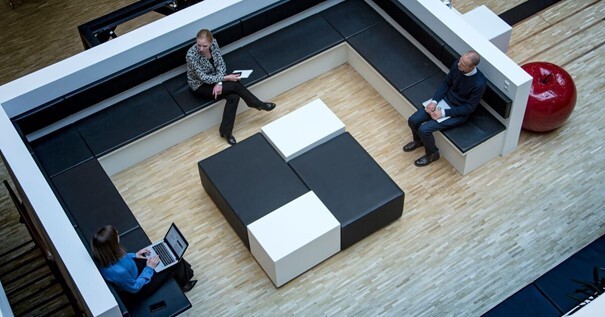
Only to a small extent. We’re hearing much more often that clients want to repurpose their office space. Many employees have proven during the crisis that working from home is a viable solution. As a result, employers are increasingly making remote work a permanent part of the workday. On the one hand, this means that not everyone comes into the office every day, so they no longer need their own workspace on a daily basis. Work requiring concentration is much more likely to be done alone at home, while people prefer to meet in person for brainstorming sessions. As a result, the demands placed on the workplace are changing. Nevertheless, collaboration must still be possible. This means that new concepts for space and its use must be developed.
So office spaces aren’t going to disappear?
Absolutely not! A sense of belonging to the team, conveying the company culture, and fostering relationships with customers cannot be successfully achieved through virtual and digital channels alone. For that, we need spaces and meeting areas tailored to these new needs. This is exactly what we’re currently discussing with our clients. We advise them on how to repurpose their spaces to offer their employees a new experience that fosters both a sense of safety and well-being.
How is this change affecting work at ISS?
In short: in many ways. New uses of space create new demands on our services. Cleaning needs to be more visible so that the increased focus on hygiene is credible and tangible. We’re also creating new roles. Think, for example, of the Wellbeing Assistants, who help building users get used to new measures in the building and find their way around. And last but not least, the appreciation shown to our employees is greater than it was before the crisis. We sometimes find little sticky notes around the building where our clients’ employees thank us for our great work. This appreciation shows just how important the work we do is.