Anyone who goes to work at ISS should return home to their loved ones safe and sound in the evening. Health and safety at work is therefore a top priority for ISS. Audrey Sauvage, Head of Health & Safety at ISS Switzerland, tells us how ISS puts health and safety into practice and what benefits this brings.
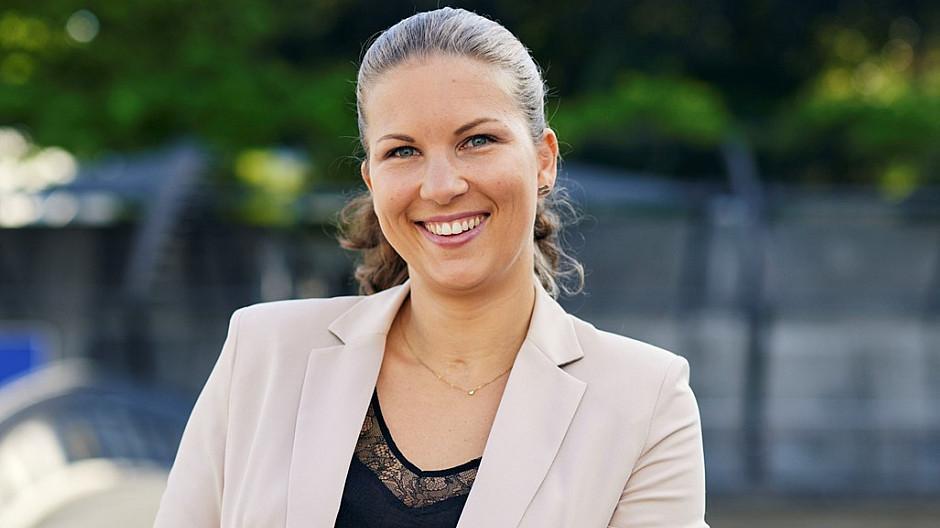

Audrey Sauvage, Head of Health & Safety
Audrey Sauvage has been responsible for Health & Safety at ISS Switzerland since 2020. Before joining ISS, she held various leadership positions in occupational safety, including a six-year stint at Flughafen Zürich AG. A native of France, she studied risk management and environmental protection at the University of Applied Sciences in Angers, as well as at the universities of Liverpool, Reutlingen, and Limoges. Most recently, she earned a Master of Advanced Studies in Industrial Engineering from the ZHAW.
Audrey Sauvage, where do the hazards lurk in facility management?
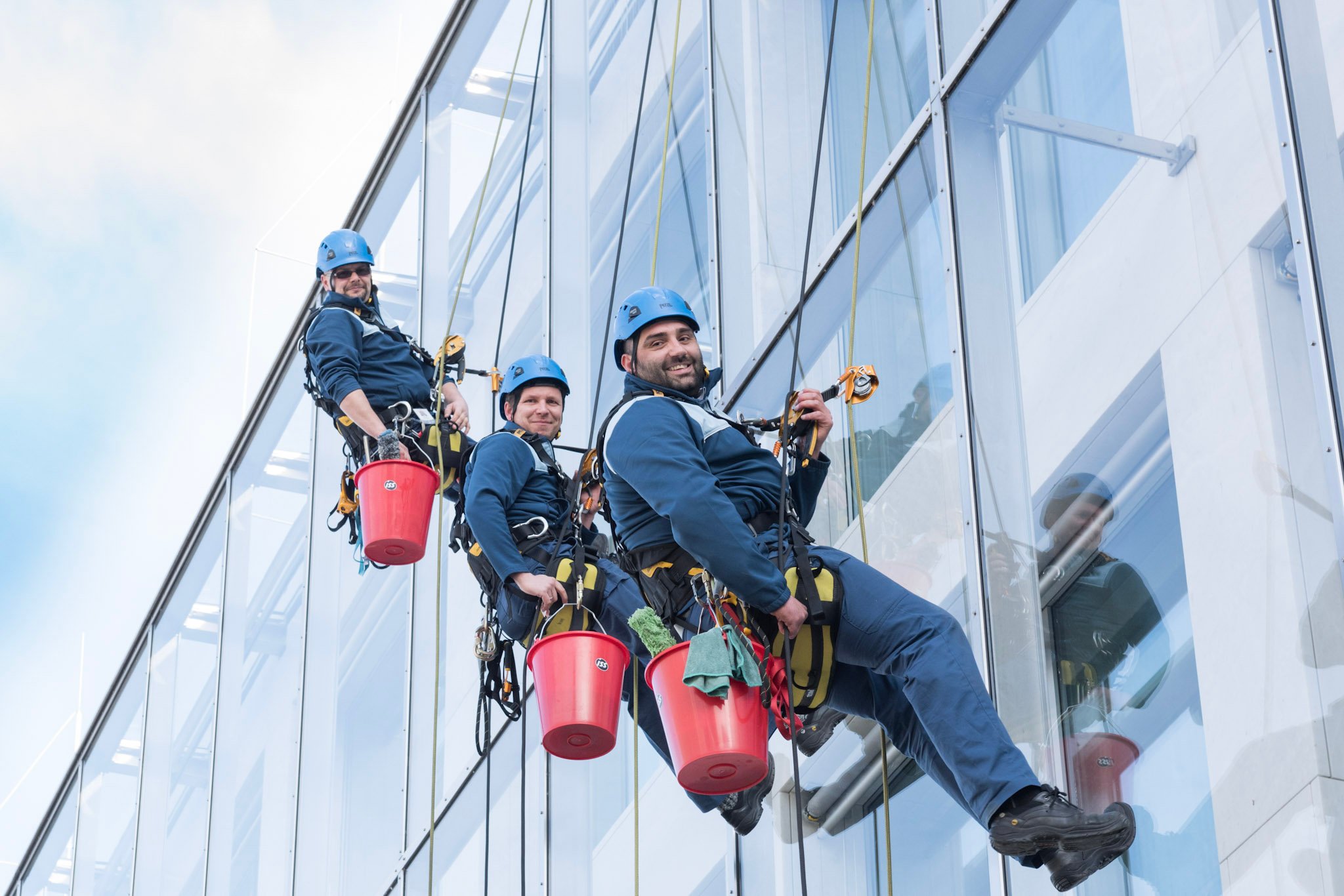
Given the wide variety of tasks and activities that ISS carries out, something can happen anywhere: while cleaning facades, cleaning stairs, trimming hedges, changing an air filter, or even while driving to a client’s location. It’s important that employees are aware of the potential hazards and know what safety measures they can take to avoid them.
What are ISS’s priorities when it comes to employee safety?
Anyone who works at ISS should return home to their loved ones safe and sound each evening. That’s why safe work practices are our top priority. We promote this awareness at every level. We continuously raise awareness among supervisors and employees about potential hazards and conduct regular training sessions. Managers play a central role in this process. They must lead by example for their employees. After all, a safety culture is not an end in itself, but has a direct impact on a company’s business success.
And how has ISS embedded this safety culture within the organization?
We rely on a range of measures. On the one hand, these include training sessions such as the hands-on Safety Day. But they also include e-learning modules that all employees regularly complete online. In addition, we reinforce our efforts through our internal network - specifically, our ISS Community of contact persons, known as “Kopas.” These individuals are close to employees in their region and serve as points of contact for questions regarding workplace safety.

The body of regulations on workplace safety is vast. What resources help you stay up to date?
ISS has a large global network of experts with a wide range of specialized knowledge. Here in Switzerland, I’m supported by specialists with many years of experience in the fields of labor inspection, life sciences, healthcare, engineering, and aviation. Former paramedics and firefighters are also now working in the field of occupational safety and health protection. I keep my knowledge up to date through external courses and by exchanging ideas with experts from Suva and other companies.
How can you assess whether the measures implemented are having a lasting effect?
We document all activities in our Velocity EHS management system. This documentation helps us strictly adhere to and demonstrate compliance with service delivery standards and regulatory requirements. However, this tool also allows us to identify where safety rules are not working. This enables us to take corrective action and reduce risks. In addition, we are developing a model tailored to ISS Switzerland that will enable us in the future to measure the maturity of our safety culture and further embed safety awareness among all ISS employees.
ISS is a member of the Safety Charter
Every year, 250,000 workplace accidents occur in Switzerland. This means that on a typical workday, an average of 120 workplace accidents occur per hour. One in every three of these accidents is fatal. The Safety Charter was launched by Suva in collaboration with employer associations, planners, and labor unions. It is an alliance among all parties involved in the workplace aimed at improving workplace safety. The signatories of the Safety Charter are committed to ensuring that safety rules are followed in the workplace. The goal is to protect the lives and health of everyone involved. Approximately 18,000 companies have signed the Charter. As responsible companies, they therefore require all supervisors and employees to adhere to the following principle at all times and in all places: STOP WHEN THERE IS DANGER | ELIMINATE THE DANGER | CONTINUE WORKING