To achieve environmental targets, improve efficiency and support our customers in their day-to-day work, ISS relies on digital solutions. Sensors are used to measure and analyse various parameters. The data provides insights that enable us to develop and refine our services and create the best possible customer experience. This overview shows which use cases are applied in practice.

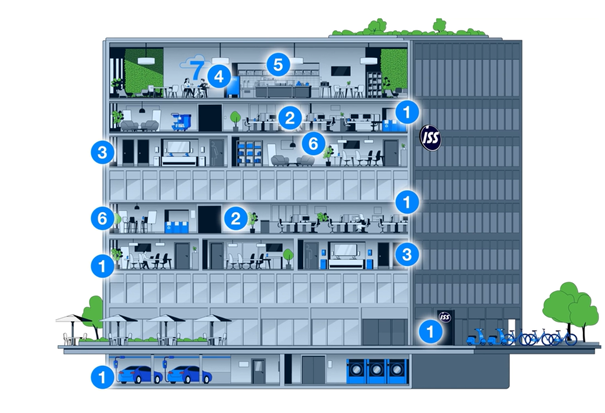
Use Case 1: Building Utilization

Through automated people counting and the tracking of occupied workstations, building occupancy can be determined, space utilization optimized, and sustainability enhanced. Traditional office spaces can be reduced in favor of collaborative work zones and relaxation areas. One sensor anonymously tracks the number of people entering and exiting, while another measures the occupancy of workstations and meeting rooms and displays available and occupied areas on a dashboard. This system can also be used in cafeterias or underground parking garages.
Use Case 2: Air Quality Monitoring

Indoor air quality is crucial in office buildings because it affects users’ well-being, concentration, and productivity. The sensor measures and records indoor environmental conditions - such as CO2, temperature, humidity, particulate matter, and ozone - and displays them on a dashboard. If the data falls below or exceeds set thresholds, a building technician is alerted via cell phone so they can make the necessary adjustments to ventilation, air conditioning, and heating.
Use Case 3: Cleaning Optimization
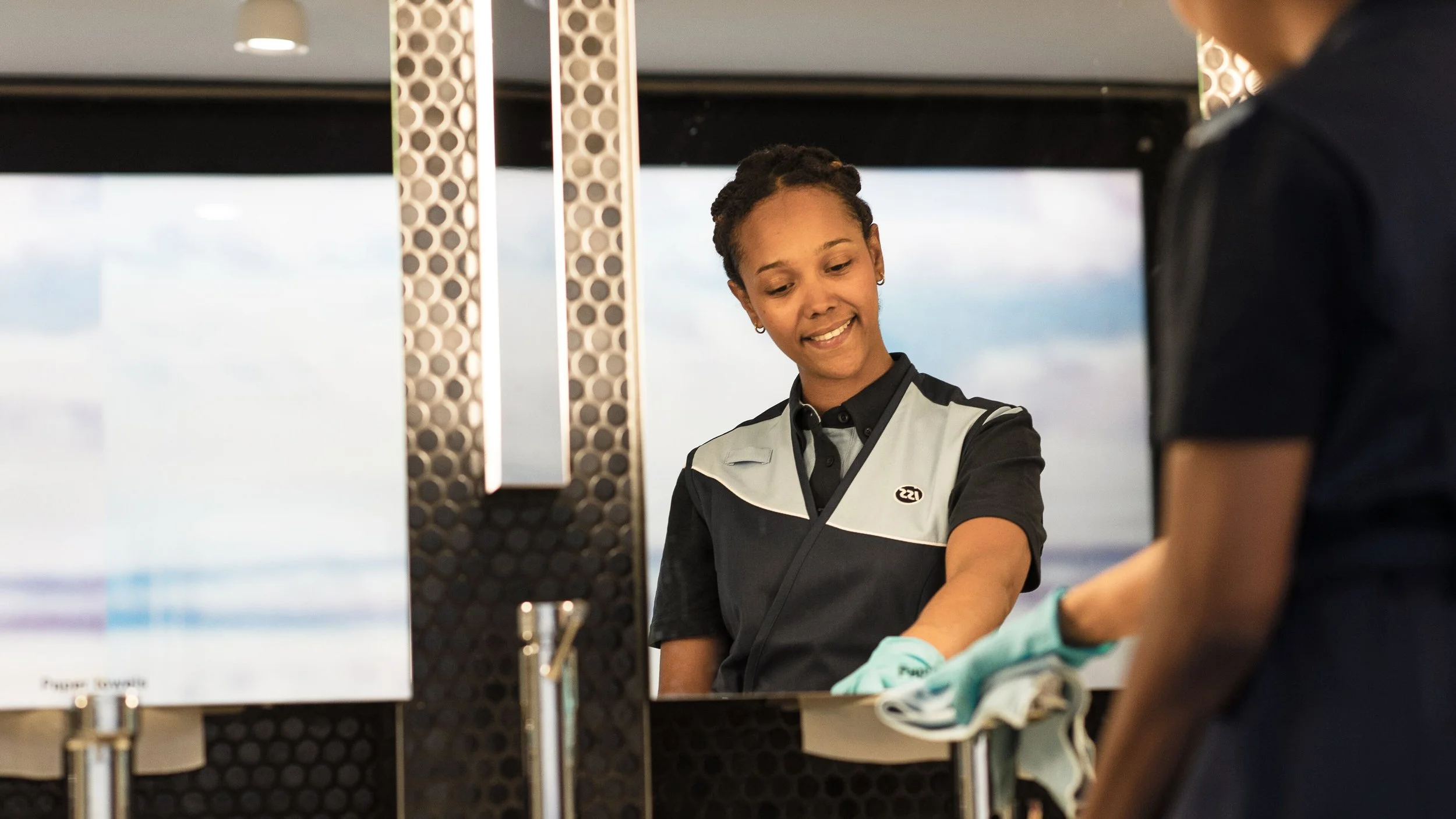
Thanks to this sensor, restroom areas are cleaned only when they have actually been used. The sensor counts the number of visits to the restrooms. When the specified thresholds are reached, a notification is sent to the facility management team, and the area is cleaned promptly. These demand-driven cleaning intervals improve the efficiency of the cleaning teams and enhance hygiene - both of which have been proven to increase customer satisfaction.
Use Case 4: Waste Bin Level
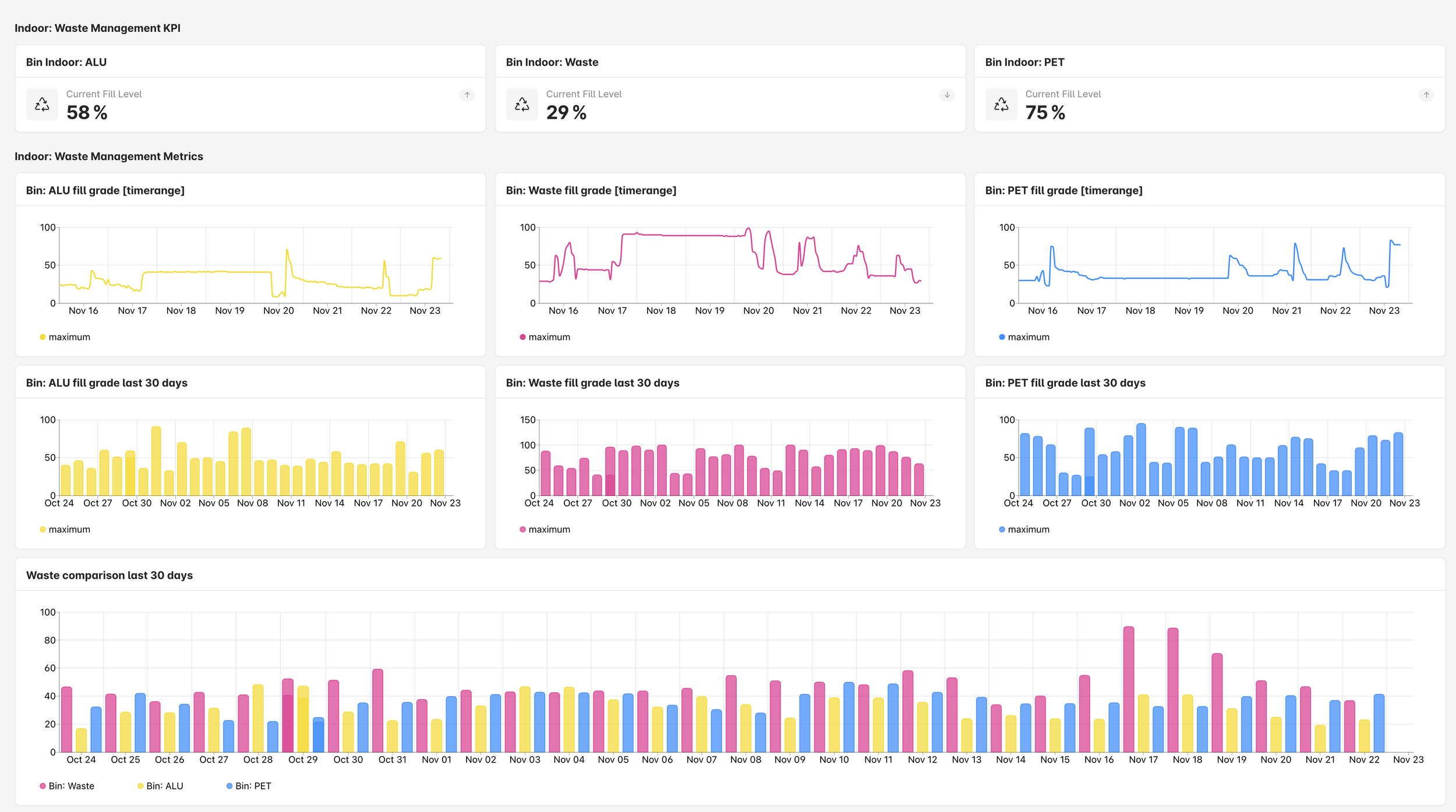
Trash cans are emptied only when they are actually full. This is more sustainable and avoids unnecessary trips by cleaning staff. The routes and times for emptying are optimized by the sensor measuring the fill level of the waste bins, communicating with our IoT platform, and triggering an alert on our employees’ mobile devices. The collected data also provides insight into waste consumption and enables further steps to optimize waste management.
Use Case 5: Cold Chain Monitoring

Perishable goods such as food, medications, pharmaceutical products, and chemical products must be kept continuously refrigerated during both storage and transport. Until now, temperature stability was verified through time-consuming routine checks and documentation. With the use of sensors, this is no longer necessary, as maintaining the cold chain is automatically ensured and documented. The sensor is installed in refrigerators, freezers, and laboratory refrigerators and triggers an alarm on the mobile devices of ISS employees at the affected location whenever temperature changes occur. If such an alarm occurs frequently, it may indicate a malfunction in the cooling infrastructure.
Use Case 6: Service Button

Spilled coffee, equipment malfunctioning in the conference room: in situations like these, customers need immediate assistance. Phone calls, emails, and searching for the right contact person are a thing of the past. When a customer needs one of our services, they simply press the Service Button and then get back to work. The notification that the ISS employee receives on their cell phone includes location details, such as the name of the conference room where the issue needs to be resolved. This on-demand service package improves the efficiency of cleaning and support services and increases user satisfaction.

At the ISS laboratory at its headquarters in Zurich-Altstetten, ISS continuously tests and develops new technologies with the goal of creating marketable services and business models for facility management.