ISS Construction Project Management regularly undertakes client assignments for renovation and fit-out projects. Read here how ISS successfully delivers projects.
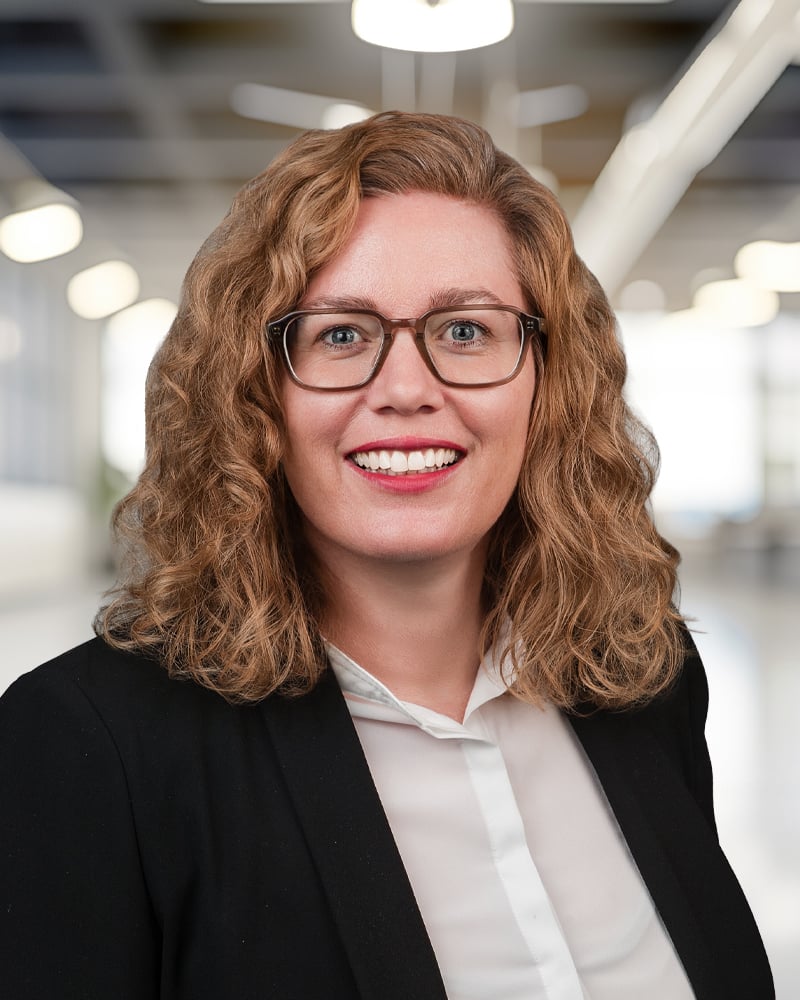

Complex construction projects require strong, dynamic leadership with a broad perspective and extensive experience. Our Switzerland-wide team of over 100 architects, engineers, MOVE managers, project assistants, and a strong Project Office offers optimal consulting, design, planning, implementation, and operation through ISS Construction Project Management. As a client representative, general planner, general contractor, or turnkey contractor, we manage a wide range of projects - from relocation planning and heating system replacements to complex workplace designs. Anita Leiser, Construction Project Manager, explains in an interview how she precisely steers challenging interior fit-out projects to completion under intense time pressure.

Anita Leiser Construction Project Management
Anita Leiser, a federally certified architect (FH), has been working as a project manager for building construction on the ISS Construction Project Management team in Zurich since 2014. She enjoys her job because it is varied and involves working with both people and materials in equal measure. Today, she primarily oversees interior construction projects.
Anita Leiser, what kinds of projects do you manage in construction project management?
ISS Construction Project Management regularly takes on contracts from clients for renovations and expansions. Recently, we had the opportunity to implement a novel workplace concept at an urban location featuring an industrial-style ambiance, innovative furniture, and seamlessly integrated work, lounge, and communication zones. The project included providing client support from the structural shell phase and managing the project from interior finishing through to handover, the selection of furniture from a shortlist, testing for functionality, the production of custom-made items, the coordination and monitoring of schedules and work, as well as reporting and cost control.
What role do you play in this process?
I work closely with the clients’ general planners and architects, who contribute the interior design, space planning, and design proposals. For new concepts, I evaluate the creative proposals in terms of functionality, safety, durability, and the effort required for upkeep and maintenance. I use prototypes for these tests. This reveals whether the furniture pieces meet the clients’ requirements. It’s worth doing this before placing large production orders.
Do you take on any other tasks?
That depends on the client’s request. Depending on the project, in addition to advising the client, I also participate in construction management. In these cases, I additionally take responsibility for ensuring that the on-site work is carried out in the client’s best interest. For example, ensuring that the general lighting, supplemented by task lights, is sufficient, and that the sunshade controls are installed where users will actually be able to operate them.
In this hub role, you serve as the point of contact for a wide variety of stakeholders and concerns. How does communication work?
Communication is actually the critical success factor in the project. All parties pursue the same goal and work consistently toward the fixed target date - namely, the move-in date. To ensure communication remains structured, we develop a joint communication plan at the start of the project. Of course, tensions inevitably arise in such often time-sensitive projects. Construction projects thrive on the friction between the various stakeholders; it usually leads to a better solution. It’s an advantage for me that I’ve been carrying out projects with our clients since 2014. Over this time, we’ve gotten to know each other and built mutual trust, respect, and a deeper understanding of our clients’ needs.

What do you need to focus on to lead a project to success?
The processes and time management. Decisions regarding design and creation often take longer than planned. If, for example, new furniture or new IT infrastructure is being used, everything must be brought together into a harmonious whole. I can support this process, steer it in a practical direction, and keep an eye on both the schedule and the costs. This allows clients to focus on the creative aspect. For ordering and production, approvals must be in place as early as possible and consistent across all parties involved. At the same time, we must give the tradespeople and suppliers the necessary time to complete the work. But we also need to find short-term solutions for unexpected challenges. For example, if height-adjustable desks and office chair backs leave scratch marks on the walls, we’ll organize wall protection elements that match the color scheme.
What personal qualities help you in projects like these?
In addition to technical expertise and experience, empathy, assertiveness, a steady nerve, and negotiation skills are certainly advantageous. Flexibility is also important. At times, I’m on the go from early morning until late in the evening. In return, I can take it easy on other days when things are going well.
How do ISS’s expertise and experience come into play?
For certain issues, I involve the ISS facility managers - who will operate and maintain the clients’ buildings in the future - in the planning process. For example, if I’m planning three different seating arrangements for a creative space, I’ll need the appropriate storage space. The facility manager has precise information on the available space. The ISS carpentry team also provides valuable insights into the properties of surface materials and installation issues. And the cleaning and lighting maintenance teams can contribute practical, real-world information. This allows me to draw on a wealth of expertise and experience to eliminate potential sources of error early on. The client appreciates this input because, ultimately, the workplace should function effectively and contribute to user satisfaction.