Beatrice Bichsel is a member of the Group Executive Board and Head of SBB Real Estate. In this interview, she explains the importance of the property portfolio to SBB, what she expects from strategic partnerships, and why close and reliable cooperation is crucial when it comes to running railway stations.


Beatrice Bichsel, what fascinates you about SBB?
The railway system in Switzerland is complex, and SBB is an exciting and very diverse company. I like how mobility and urban development are intertwined at SBB Real Estate: Thousands of trains run on time and at frequent intervals every day. The stations are located in the heart of cities; they are central meeting places and hubs of daily life. This interplay is unique and fascinating.
What does your area of responsibility entail?
I am a member of the Group Executive Board and, as Head of Real Estate, I am responsible for SBB’s real estate portfolio. It is divided into three areas: the train stations, the buildings used for operations - such as workshops, offices, and break rooms - and the areas surrounding the stations.
What is the specific focus of site development?
Our site development projects combine mobility with urban and regional planning. We manage traffic flows, optimize transfer routes, and create new living spaces. In doing so, we work very closely with cities and municipalities.
How large isSBB’sreal estate portfolio?
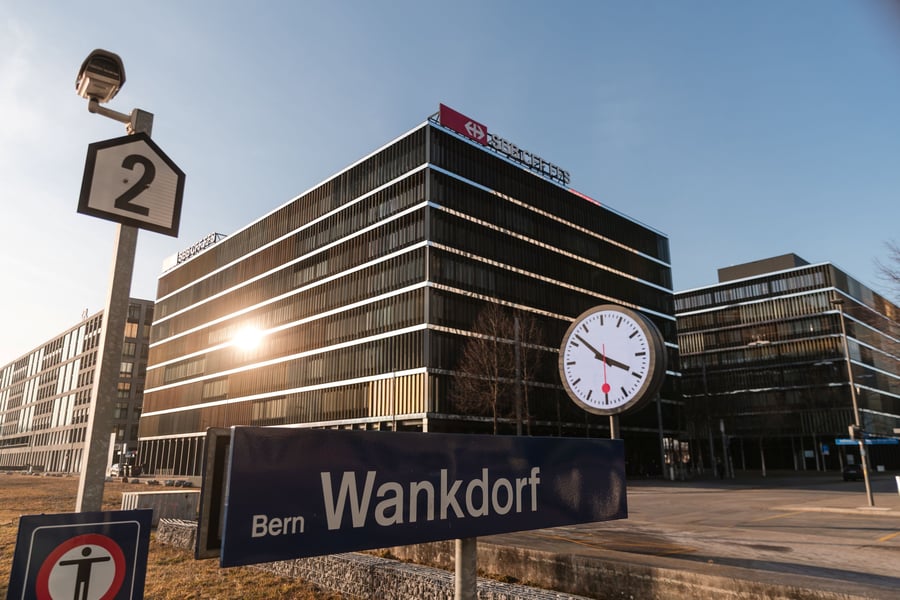
We manage approximately 2,600 buildings throughout Switzerland, 800 of which are train stations and stops. In addition, there are about 150 construction projects currently in the planning or construction phases.
Is there a building that you particularly like?
I’m generally fascinated by train stations. Every region has architecturally intriguing buildings - some of which are historic landmarks - that pose significant challenges in terms of planning and operations. For example, I really like the Lucerne train station, especially when it’s bathed in sunlight, right on the lake, with its open architecture.
How important is the real estate portfolio to SBB?
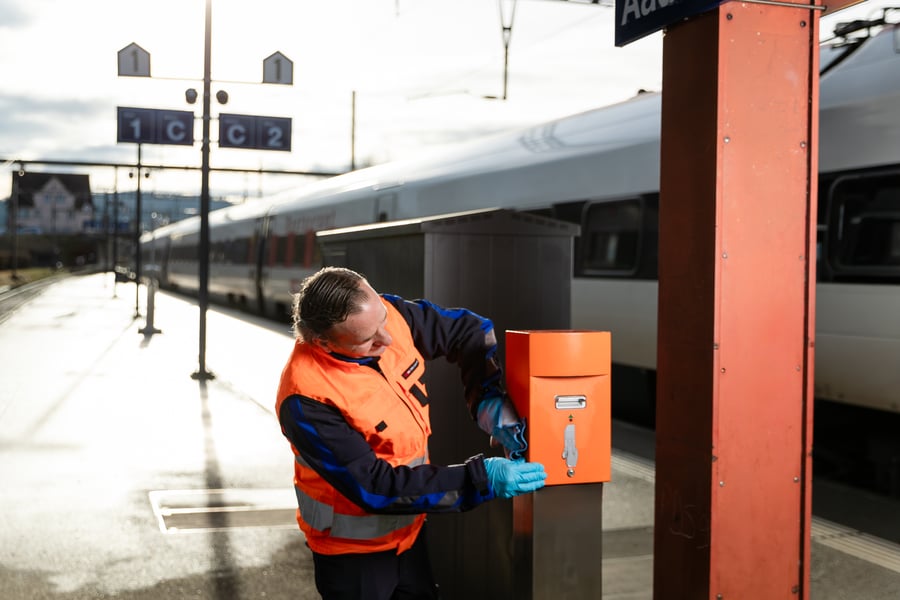
It’s of very high importance. Train stations shape the first impression our customers have of us; they are gateways to the rail system and thus SBB’s calling card. Our operational facilities serve our employees: they should feel comfortable and be able to do their jobs professionally and efficiently. And the stations and investment properties make an important financial contribution: every franc earned stays within the rail system. We make annual compensation payments in the hundreds of millions to the infrastructure and contribute to SBB’s financial stability.
How do you ensure the sustainable and efficient operation of your portfolio?
A key factor is the early involvement of facility management. Operations, maintenance, and sustainability must be consistently factored in right from the planning stage. For us, sustainability is central in three dimensions: environmental, economic, and social.
SBB as a whole aims to reduce operational greenhouse gas emissions by 60 percent by 2030 compared to the base year of 2018; by 2040, we aim to be net-zero. Building operations play a very important role in this effort. For example, we are systematically replacing oil and gas heating systems and modernizing approximately 75 systems each year.
“Train stations are central meeting places and hubs of daily life.”
Beatrice Bichsel, Member of the Group Executive Board and Head of SBB Real Estate
How important are reliable and committed facility management partners for SBB?
Reliable partners are essential. They provide important services for our customers and our employees. A few years ago, we reviewed the value chain and decided to rely on our own staff at the 120 stations with the highest customer traffic. Wherever we believe that third parties can perform these complex tasks more efficiently than we can, we rely on external service providers. In doing so, professionalism, commitment, reliability, and safety expertise are important to us.
What do you expect froman FM partner?
Quality, a fair price-performance ratio, and a solution-oriented approach are crucial. We value partners who take responsibility, address problems openly, and work with us to develop solutions. We always welcome suggestions and expect our partners to come up with ideas on how we can improve our processes. Partnerships like the one we have with ISS form the foundation for safe, clean, and smoothly running station operations.
What role does digitalization play in property management?
It is central. We have modernized our IT infrastructure, thereby creating a reliable data foundation for our business operations. We have established a CRM and tenant platform and are driving the use of BIM* - from planning through to operations. BIM provides us with comprehensive, digital building documentation. This gives us access to high-quality data early on, allowing us to better prepare for operations and design processes more efficiently.
What about robotics at train stations?
We’re constantly testing new technologies. However, we’ve found that in the bustling day-to-day life of a train station, people give our services a human face, can react flexibly, and are currently more efficient than cleaning robots. Our stations are currently too complex and simply too heavily trafficked for robotics. However, we see potential in facade cleaning or in areas with restricted access. The important thing is that technology should be supportive. People remain central.
What three things would make your job easier?
I’d like to see more pragmatism in planning and permitting processes, because ten years or more to rezone an area is simply too long. From the FM industry, I’d like to see an even stronger focus on customer service, comparable to that in the hotel industry. And third, society’s appreciation for operational professions is very important to me. The work these people do is indispensable to our daily lives, and that should be recognized more strongly.