The goal of every hospital is to ensure its patients receive complication-free treatment. A high standard of hygiene, which reduces the transmission of germs and infections, is crucial in this regard. ISS Healthcare experts Martina Fässler and Barbara Duppenthaler explain how ISS empowers its employees to recognize and reduce the risks associated with working in hospitals.

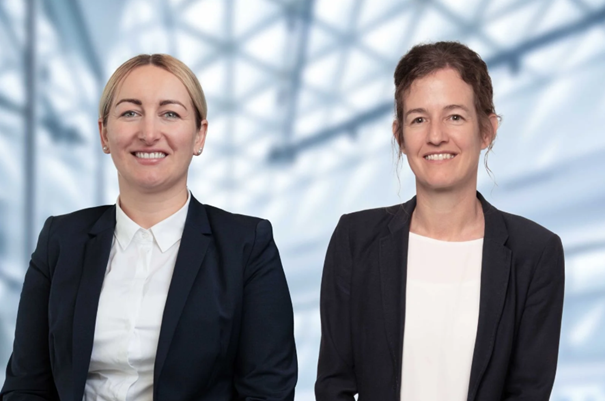
Martina Fässler, you manage 15 major clients in the healthcare sector at ISS Switzerland. What do healthcare institutions expect from a facility services provider like ISS?
Martina Fässler
Our clients have very high expectations regarding the impeccable cleanliness and hygienic cleaning of their facilities, as well as the professional demeanor of our employees in the hospital. They also expect our employees to receive ongoing training and for quality to be monitored and documented through reports. Today, clients consider digital order, quality, and document management systems to be standard.
How does ISS meet these requirements?
Martina Fässler
Our on-site operational teams work closely with the hospitality staff, medical personnel, hygiene officers, and the hospital’s technical services department. This includes regular meetings and quality circles. For quality assurance, the central ISS Healthcare expert team conducts regular audits and supports the operational teams with training and process optimizations. The measures are documented in the Monitoring@ISS quality management system. I am convinced that, in addition to efficient organization, open communication with all stakeholders is essential for such a complex interdisciplinary collaboration to function effectively.

Training sequence for final cleaning in the operating room
Barbara Duppenthaler, you are responsible for hygiene standards at ISS in Switzerland. Why is cleaning in hospitals particularly sensitive?
Barbara Duppenthaler
The risk of germs is part of everyday hospital cleaning. However, some areas are particularly sensitive: Every day, patient rooms and examination rooms are isolated and must then undergo special cleaning and disinfection. One of the challenges in the operating room area lies in close coordination with the surgical teams, especially during interim cleanings in the operating rooms throughout the day. Finally, in cleanroom facilities, high hygiene standards and the utmost care are required. Substances known as cytostatic drugs, used for cancer treatment, are produced there, and cleaning is carried out according to strictly documented regulations and approved processes.
How does ISS empower its employees to identify and mitigate risks?
Barbara Duppenthaler
The challenge lies in the fact that these are invisible hazards posed by germs. Our employees must understand the context to meet these high standards. To this end, we conduct training at all levels and, where necessary, support staff in their daily work. Standardized quality and process controls, as well as self-monitoring by employees, also help reduce risks. And let’s not forget personal protective equipment (gloves, face masks, isolation gowns, etc.) or the use of state-of-the-art products and equipment.

Hands-on training is a key component in ensuring quality standards.
How does ISS ensure this broad range of expertise?
Martina Fässler
We are in regular contact with specialist groups at our tertiary-level education partners and with our own experts. We also draw on the global expertise of ISS’s country subsidiaries, discuss best practices, and drive developments and innovations. For example, our British colleagues inspired us to develop a digital on-demand service. This allows nursing staff to request cleaning services via an iPad at the patient’s bedside. In Switzerland, we developed and tested the solution in collaboration with a Swiss technology partner and are now ready to offer this service to our Swiss clients.
A pressing issue in the healthcare sector is the shortage of skilled workers. How is ISS addressing this?
Martina Fässler
ISS is committed to addressing this issue on various levels. We provide proven employees with vocational training at the EFZ level as well as in accordance with Article 32 of the Vocational Training Ordinance. This enables them to qualify as Housekeeping Specialists and to advance both professionally and personally up to the position of Department Head of Hospitality and Housekeeping. We also offer internship positions. Up to five students from our tertiary-level educational partners complete healthcare internships at ISS each year. The interns are involved in client projects and can apply their knowledge in a practical setting. In turn, our clients benefit from this up-to-date expertise, and together we make an important contribution to fostering future skilled professionals.
For All Employee Levels: Intensive Training Program
The foundation of the ISS training program is the facility orientation, as well as basic, advanced, and refresher training in cleaning. This includes specific training for hospitals: cleaning patient and resident rooms, cleaning isolation rooms, operating room cleaning, bed and discharge cleaning, and hygiene regulations. In addition, ISS offers specialized courses for cleaning critical infrastructure such as MRI rooms and cleanroom facilities. The program is rounded out with Health, Safety, and Environment (HSE) training tailored to hospitals, monthly training sessions on specific cleaning topics, and a course for managers launched in 2022 that covers everything from healthcare and FM expertise to leadership.